Cold Stress
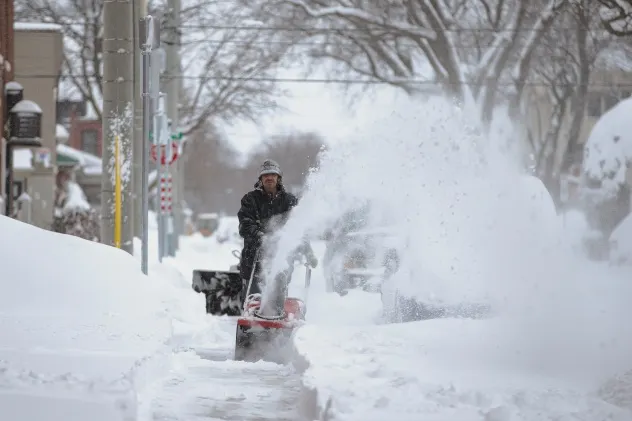
The season’s first snowfall blanketed parts of the East Coast, Midwest and Canada last week. Wisps of white dotted the streets and trees, inspiring that fuzzy and familiar holiday feeling. Temperatures however, dropped to a chilling -20°C (-4°F) in some areas. Cold weather and snowfall warnings appeared on several news networks, cautioning people to dress warmly and drive carefully.
While icy roads and low visibility prompt dangerous situations, cold conditions can also harbor many health hazards, potentially causing irreversible injuries or life-threatening illnesses. This post will mainly focus on the negative health effects of cold environments.
 Retrieved from: https://news.yahoo.com/accuweathers-2022-2023-canada-winter-134340958.html
WHAT IS COLD STRESS?
Cold stress in simple terms, refers to the amount or type of stress the cold can place on the human body. Cold stress covers a group of cold-related injuries and illnesses, including frostbite, chilblains and hypothermia, to name a few. Cold stress occurs gradually, when the body loses heat faster than it can be replaced.
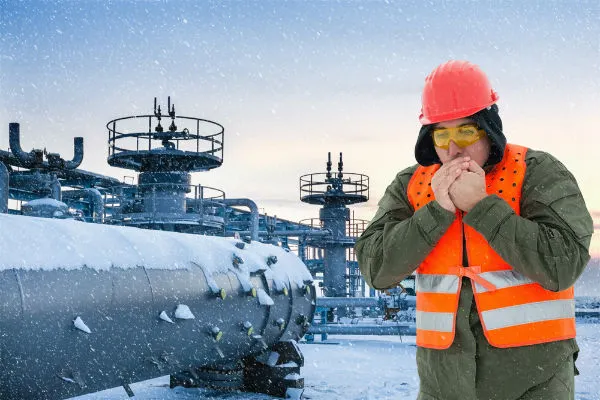
Cold stress not only affects people outdoors, but can also impact individuals working in labs, food manufacturing and other refrigerated or cold workplaces. In addition to cold stress, outdoor employees in construction, transportation, emergency response and maintenance also deal with slippery surfaces, high winds and whiteout conditions during active cold weather.
 Retrieved from: https://www.thesafetymag.com/ca/topics/safety-and-ppe/how-to-prevent-cold-stress-among-outdoor-workers/183824
PHYSIOLOGICAL RESPONSES TO THE COLD
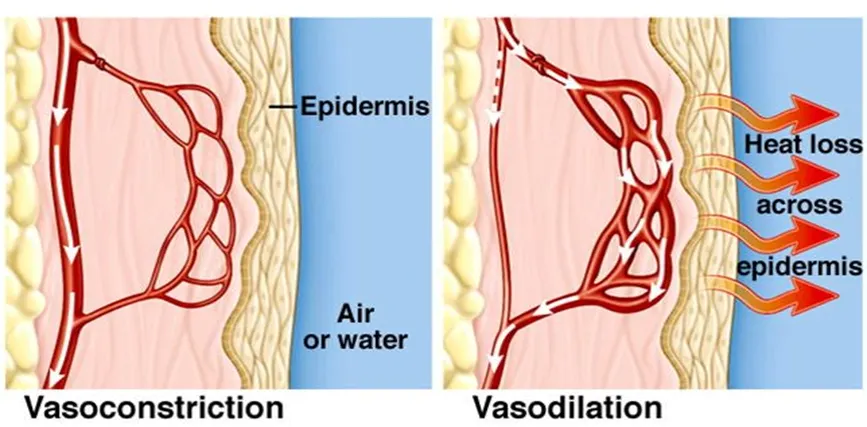
When exposed to cold environments, the body responds in two ways to maintain internal heat and protect vital organs.
- Shivering: Shivering involves rapid skeletal muscle contractions that help generate heat inside the body.
- Vasoconstriction: Blood carries heat, nutrients and oxygen around the body. Vasoconstriction refers to the narrowing of blood vessels at the skin to minimize heat loss and retain heat near core organs.
 Retrieved from: https://pmgbiology.com/tag/vasodilation/
COLD-RELATED ILLNESSES
Internal defense mechanisms can only reach so far. When these mechanisms fail, cold environments can lead to a range of negative outcomes, from losing a toe all the way to losing a life.
Hypothermia: Out of all the cold stress disorders and injuries, hypothermia has the highest chance of leading to a fatality. Prolonged exposure to the cold causes the body to lose heat faster than it can produce it, leading the internal body temperature to fall below 35°C or 95°F. Low body temperature affects the heart, brain and nervous system, prompting loss of mental and physical ability, heart failure, unconsciousness or death.
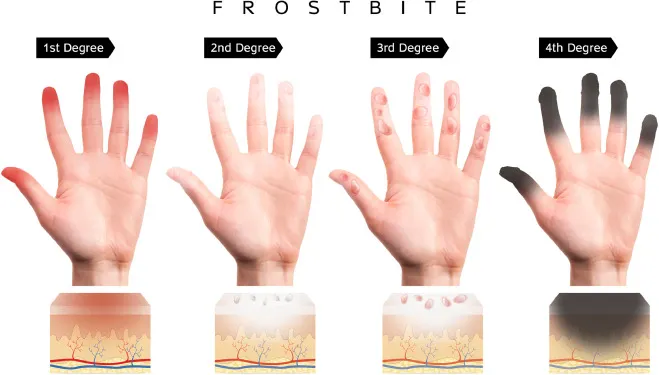
Frostbite: Frostbites develop when the cold freezes internal tissues, discolors the skin and numbs any feeling. When tissues freeze, blood vessels constrict at the skin to maintain proper heat near vital organs. Lack of blood flow negatively affects the transport of oxygen, heat and nutrients, potentially leading to gangrene formation or requiring amputation.
 Retrieved from: https://www.sciencedirect.com/science/article/abs/pii/S0020138322005186
Frost nip: As a milder version of frostbite, frost nips cause external skin to freeze and peel but the internal tissues remain soft. Frost nips provide a painful warning to seek treatment immediately and avoid the more severe frostbite.
Trench Foot: Trench foot involves an injury to the feet from exposure to excess cold and dampness. Wet feet lose heat 25 times faster than dry feet. Similar to a frostbite, trench foot causes blood vessels to constrict at the feet, hindering circulation of heat, nutrients and oxygen. Trench foot symptoms include blotchy, red and blistered skin, eventually leading to dying tissues and increased susceptibility to infections. Trench foot became a fatal concern during the first world war where soldiers fought in cold, damp and unsanitary environments.
Chilblains: Cold exposure can also cause a condition called Chilblains, where capillary beds in the skin become damaged. The skin becomes red, itchy, swollen and painful.
Raynaud’s Phenomenon: Raynaud’s phenomenon or White Finger Disease refers to a disorder of the fingers caused by exposure to cold temperatures or vibration. Cold temperatures and hand-arm vibration cause blood vessels to spasm, decreasing blood flow to fingers and turning them white. When warmed, the fingers turn red, swollen and painful. This disorder mostly affects people working in cold environments or using vibrating hand tools such as jackhammers or angle grinders.
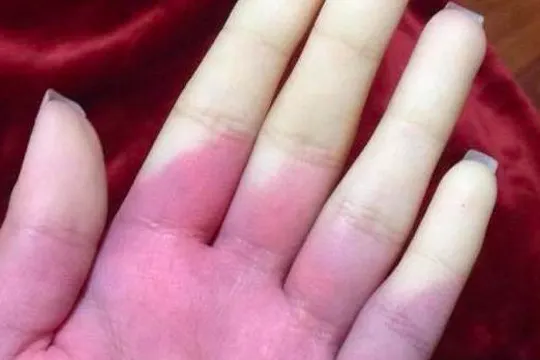 Raynaud’s Phenomenon. Retrieved from: https://practicingclinicians.com/the-exchange/understanding-raynaud-s-phenomenon
THE BODY’S HEAT BALANCE EQUATION
The body generates heat through metabolism (M) and loses heat through evaporation (E). When exposed to a cold environment, the body can lose heat through additional external forces such as conduction (D), convection (C) and radiation (R). In a cold environment, the heat balance (H) equation goes as follows: H = M - D - C - R - E
On the flip side, heat exposure would change the equation to, H = M + D + C + R - E, meaning that the body would gain heat externally through conduction, convection and radiation. This equation becomes especially important when determining proper controls for cold stress.
- Conduction: The body loses heat when making contact with a cold object or surface.
- Convection: The body loses heat when making contact with cold moving air or fluid.
- Radiation: The body loses heat to cold surrounding surfaces without making contact. Radiant heat and cold can travel through electromagnetic waves without the presence of matter.
- Evaporation: The body always loses heat through evaporation and exhalation, be it in a cold or hot environment. When exposed to heat, the body sweats out water which evaporates and cools the body. Evaporation greatly rises with wet clothes and hair. One must be extremely careful to protect clothing and hair from getting wet in the snow.
FACTORS CONTRIBUTING TO COLD STRESS
Cold stress differs in severity depending on the following factors. These factors also help shape proper controls to prevent cold stress.
- Wind or Air Velocity: Windy conditions increase the evaporation rate and cause heat to leave the body more rapidly. When combined with air temperature, wind has the ability to increase the chances of frostbite, as shown in the image below. The term “wind chill” refers to how cold a person feels when exposed to a combination of air temperature and wind. Wind chill initially lowers the skin temperature and eventually drives down internal body temperature.
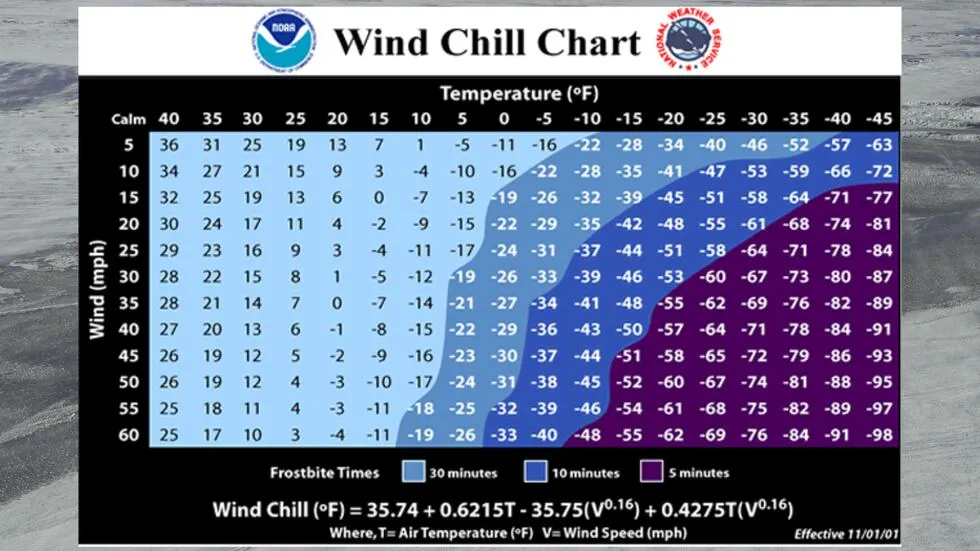 Retrieved from: https://www.kfyrtv.com/2022/12/22/science-behind-calculating-wind-chill-how-quickly-dangerous-wind-chills-cause-frostbite/
- Air Temperature: Colder air temperatures increase the chances of cold stress.
- Wetness: Wet skin, clothes and hair lose heat up to 25 times faster than dry skin, clothes and hair.
- Amount of Time Spent in a Cold Environment: The longer a person spends in a cold environment, the higher the chance of developing a cold-related illness.
- Physical Activity: Standing or sitting for a long time in the cold without moving can also increase the chances of cold stress. Physical activity increases metabolic heat in the body. However, too much physical activity in the cold can also place excess stress on the heart and dehydrate the body.
- Clothing: Clothing helps insulate the body from cold conditions.
- Individual Factors and Health Conditions: Older adults are more susceptible to cold stress. Alcohol, drugs and some medicines can also inhibit one’s ability to regulate their internal heat. Pre-existing conditions such as diabetes, hypertension and hyperthyroidism can also contribute towards developing cold-related illnesses. Spinal cord injuries hinder the ability to shiver and brain injuries impair thermal regulation.
- Work-Related Hazards: Some workplaces harbor various hazards that can damage the skin and its ability to defend itself against the cold. Certain chemicals dry out the skin, while flames and excess heat damage tissues. Vibration also impacts blood circulation, increasing susceptibility to frostbite, Raynaud’s and chilblains.
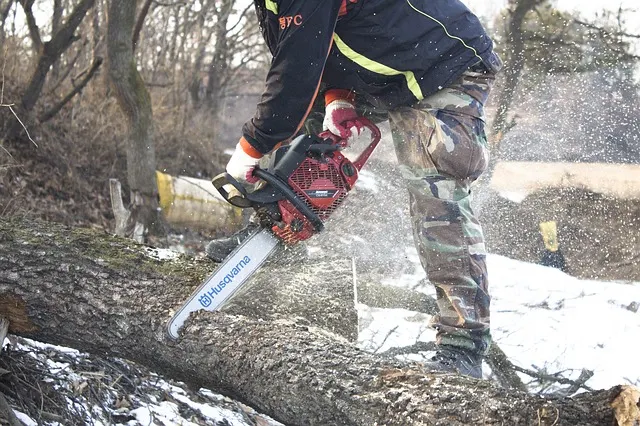 Using a vibrating tool can increase one’s chances of developing cold stress. Retrieved from: https://esselacoustics.com/news/cold-weather-and-hand-arm-vibration-syndrome-havs/
CONTROLS
Companies can choose several controls to prevent or reduce the chances of cold stress. Depending on the job at hand, companies can opt to eliminate cold exposure, choose safer alternatives, design engineering controls, implement administrative controls or provide personal protective equipment.
Elimination
Working in a warm environment typically eliminates the chances of cold stress. On extremely cold days, consider moving outdoor operations inside, performing them under a roof, or postponing them to another day.
However, elimination controls may not prove feasible for emergency responders, drivers and maintenance technicians. Emergencies will always prompt these professionals to go out in the cold and address critical situations. For these individuals, companies may need to look at other controls.
Substitution
Remember that wetness, wind, chemicals and vibration can contribute to cold stress. Reducing exposure to these specific hazards can work as substitution controls for cold stress.
- Implement processes that generate less water, vibration and cold to help decrease the chances of developing cold stress.
- Plough and salt snowy or icy surfaces to prevent employees from falling down and getting wet.
- Substitute ladders with aerial lift equipment to avoid slippery rungs.
- Replace drying or corrosive chemicals with less hazardous alternatives. Use safety data sheets to determine the corrosivity and skin-related hazards of a particular chemical.
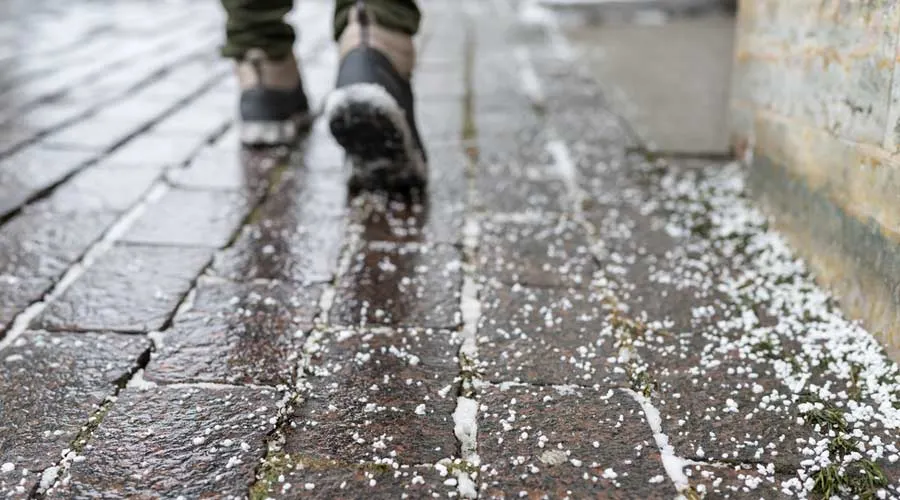 Salted surfaces. Retrieved from: https://www.cleanlink.com/hs/article/Ice-Melt-Dos-and-Donts–5191
Engineering
Engineering controls provide barriers between the hazard source and the person. When certain jobs cannot implement elimination and substitution controls, engineering controls provide the highest level of protection from any harmful exposure. To avoid cold stress, consider the following:
- Enclose or guard equipment that manufactures chemicals, uses water or generates cold.
- Encapsulate metal handles and equipment with insulating materials to slow heat loss through conduction.
- Install temporary roofing or tarps to shield outdoor employees from wind effects.
- Provide radiant heaters for indoor employees or outdoor staff on a warm-up break.
- Use equipment to prevent excess physical exertion.
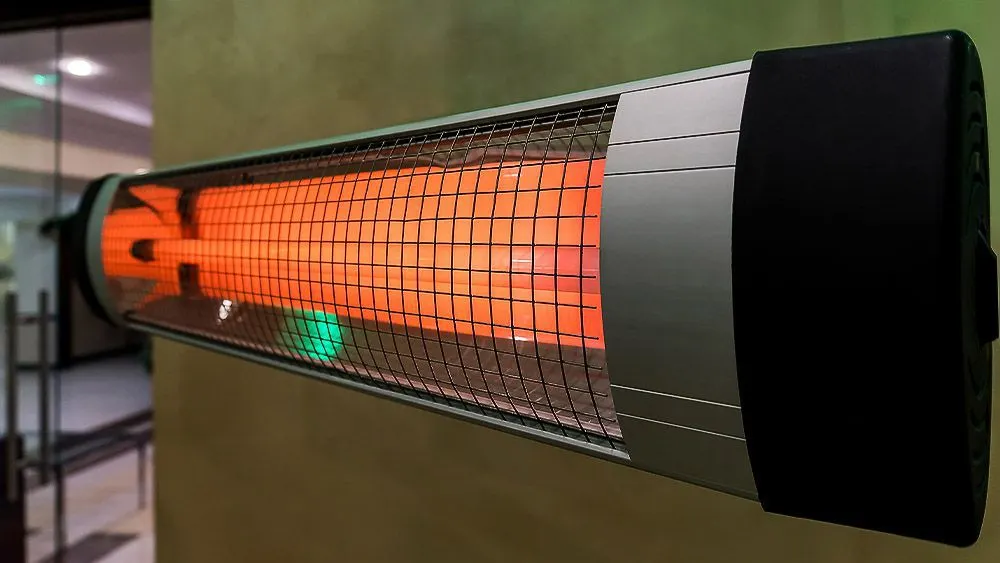 Radiant heaters. Retrieved from: https://cielowigle.com/blog/office-heating/
Administrative
Administrative controls focus on changing work procedures and employee behavior. Altering employee behavior is difficult but can lead to successful results if implemented properly.
First, train employees about cold stress. People cannot effectively protect themselves if they don’t know about the hazard or its consequences. Plan a safety talk to discuss the warning signs of cold stress and company controls and policies to mitigate health effects.
Next, acclimatize employees to the cold. Start by having them work in the cold for a brief amount of time and provide frequent breaks. Gradually increase the time spent by say, 15 minutes a day. Continue this practice for about two weeks to help them adjust. Encourage employees to maintain proper nutrition. New hires and older adults need extra time to acclimatize.
In the meantime, schedule outdoor work for warmer parts of the day. Afternoons are generally warmer than the mornings. For the night shift, earlier times in the night are warmer than the hours before sunrise.
Always assign outdoor work with at least two people. If something happens to one person, their work buddy can report it to the appropriate staff. Reduce activities that involve heavy work, static activity or sitting or kneeling on cold surfaces.
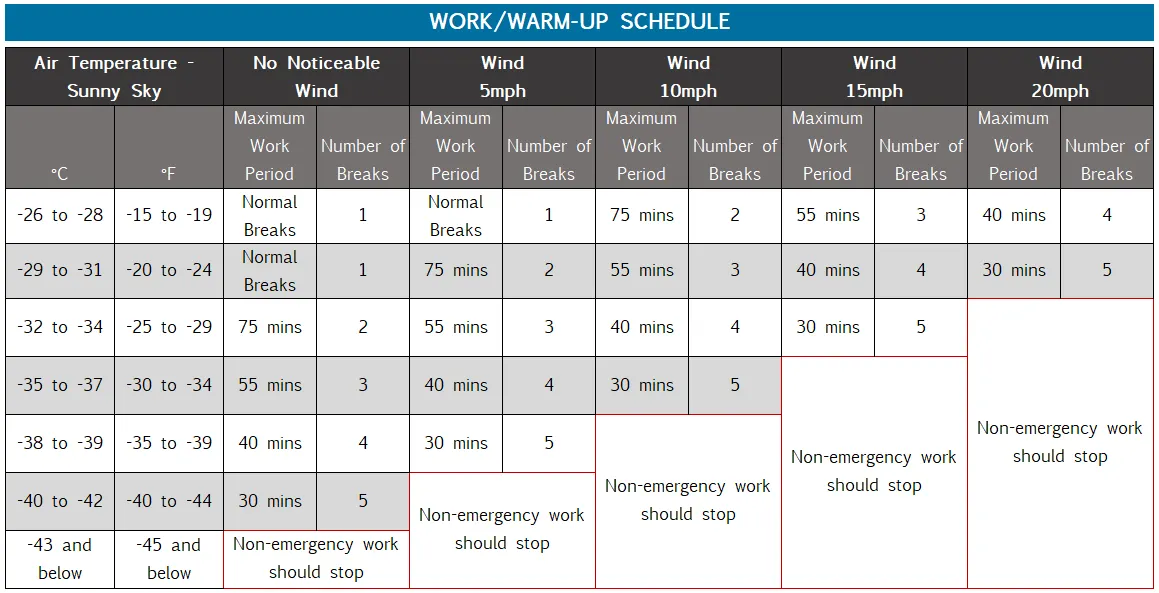
Once acclimatized, don’t eliminate the breaks. Use the following table from ACGIH (American Conference of Governmental Industrial Hygienists) to develop a work/warm-up schedule. Encourage employees to hydrate during this break.
 Retrieved from: https://www.probstgroup.com/2019/01/25/surviving-the-cold/
Personal Protective Equipment (PPE)
PPE for cold stress revolves around clothing such as hats, gloves, socks, footwear and jackets. Individuals working in the cold should wear at least 3 layers of clothing, with the outer layer being wind-proof, if outdoors, and the inner layer being made of wool or acrylic.
Employees must wear hats in cold environments. 40–50% of heat goes out a person’s head. When selecting gloves, consider the warmth factor and the task at hand. Bulky gloves may hinder the employee from doing their job and lead to ergonomic issues. Choose water-resistant footwear with good grip. A company may also provide battery-operated heated jackets and heating pads to keep their employees warm.
 Retrieved from: https://osha10hrtraining.com/blog/winter/risks-of-working-in-the-cold-stress/
CONCLUSION
In summary, a cold environment can result in brutal working conditions and irreversible health effects. Engineering and administrative controls along with proper clothing will help maintain heat and reduce the chances of cold stress in the workplace. Some of these controls can even be used outside the workplace, when taking part in recreational activities or performing errands.
For those who must brave the cold as part of their jobs, understanding the contributory factors of cold stress is paramount for developing protective and preventative measures.
REFERENCES
- Cold stress. (2023, March 16). Cdc.gov. https://www.cdc.gov/niosh/topics/coldstress/default.html
- Hamel, K. (2018, December 13). Warm up your workforce using hierarchy of controls. EHS Today. https://www.ehstoday.com/safety/article/21919923/warm-up-your-workforce-using-hierarchy-of-controls
- Winter Weather — Cold Stress. (n.d.). Osha.gov. Retrieved December 6, 2023, from https://www.osha.gov/winter-weather/cold-stress#:~:text=Cold%20stress%20occurs%20by%20driving,damage%20and%20death%20may%20result.