Ventilation for Industrial Contaminants
Ventilation serves many purposes, be it in the workplace or at home. Proper ventilation can regulate heat, remove odors, maintain oxygen and control harmful contaminants. Airborne contaminants include dust, fumes, smoke, vapors, microorganisms, volatile organic compounds (VOCs) or chemical particulates.
Contaminants can be found in manufacturing, construction, mining, healthcare, labs, restaurants and many other industries. When inhaling a certain amount of these substances over a period of time, workers may develop a variety of health issues, from respiratory irritation all the way up to cancer or premature death. If these contaminants leave the workplace and travel into the environment without controls, they may increase the chances of ill health across an entire population, leading to a public health problem.
Ventilation is a popular engineering control to maintain occupational and public health. To curb the concentration of contaminants in a given space, workplaces typically use two types of ventilation: local exhaust and dilution.
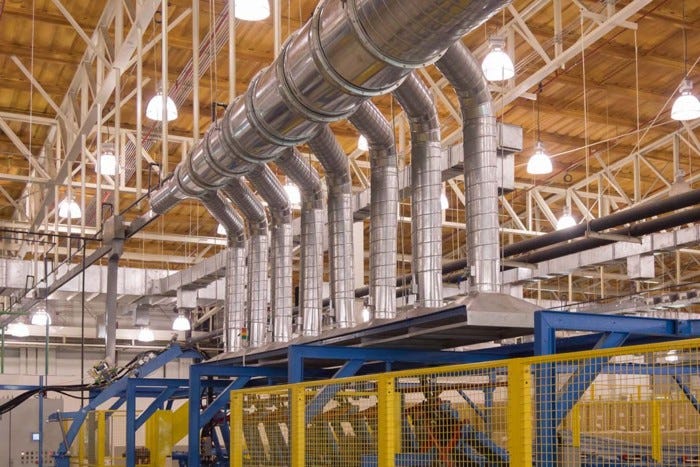 Retrieved from: https://braunintertec.com/insights/common-pitfalls-in-designing-industrial-ventilation-systems/
Local exhaust ventilation captures contaminants at the source before they reach an individual’s breathing zone. Dilution ventilation uses clean air to dampen the concentration of existing contaminants in a space. Local exhaust ventilation provides a proactive approach to removing contaminants, making it more effective against toxic substances.
This post will cover key ventilation principles and examine both ventilation types while focusing more on local exhaust ventilation.
AIR FLOW AND PRESSURE
The concept of air flow should always dictate the design and purchase of a particular ventilation system. Air flow influences how much contaminant stays in the air and how much of it can be removed within a fixed time period.
The amount of air flow depends on the air velocity and the cross-sectional area of the room or duct through which the air flows. Air flow can be determined using the following equation:
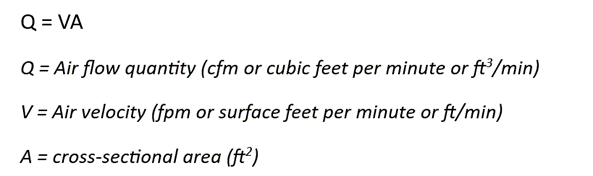
For example, suppose a rectangular duct has a width of 0.25ft and a length of 10ft with air velocity stands at 1000 fpm. The air flow would be 1000 x 0.25 x 10, which equals 2500cfm.
Air flows when there is a pressure difference between two locations, moving from high pressure to low pressure. Air exerts static pressure at rest and velocity pressure during movement. When a ventilation system sucks air in, the static pressure increases inside a given space (eg. duct or room) and becomes positive. As air leaves the system, then the static pressure becomes negative inside the space. A negative pressure room keeps contaminants in and prevents them from escaping, like the biohazard containment rooms in hospitals or asbestos abatement chambers.
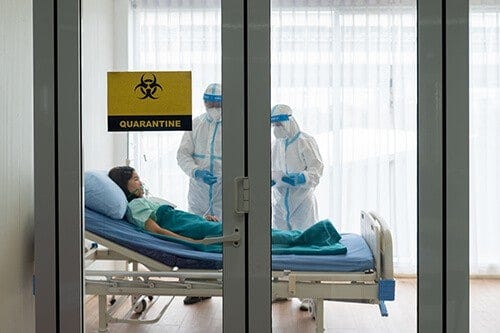 Retrieved from: https://airinnovations.com/blog/create-negative-pressure-room/
Velocity pressure is always positive. Together, static pressure (SP) and velocity pressure (VP) make up the total pressure (TP) that creates air movement. In other words, SP + VP = TP.
Effective contaminant capture also revolves around pressure losses. As air flows through a pipe or duct, it can lose pressure due to many elements. For example, air loses pressure when it flows through a longer duct or comes across more friction. Bends in the duct or changes in the area can also lead to pressure losses. As pressure loss increases, the ventilation system uses more energy to compensate, leading to greater costs and lower efficiency.
Air flow and pressure impact contaminant removal in every step and component of a local exhaust and dilution ventilation system. Let’s explore the details of both systems below.
LOCAL EXHAUST VENTILATION
A local exhaust ventilation (LEV) system is positioned close to the source where it sucks air in through a hood, removes contaminants with an air cleaning device and pushes clean air through an outlet.
The LEV system has the ability to extract the majority of a contaminant from breathing air. LEV also uses much less air to draw in and clean contaminants. Flammable substances must have non-sparking components to prevent fires.
An LEV system consists of five main components:
- Hood: Draws air into the ventilation system.
- Duct: Carries air around the system.
- Air cleaning device: Collects and captures the contaminants.
- Fan: Pushes air through the ducts and out the exhaust stack.
- Exhaust stack: Releases cleaned air out of the system.
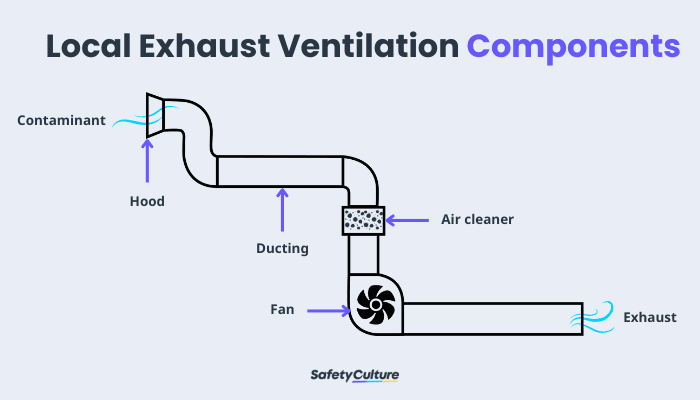 Retrieved from: https://safetyculture.com/topics/local-exhaust-ventilation
The Hood
The hood acts as the gateway for air to enter a ventilation system. Depending on the job at hand, companies may use an enclosing hood or place an external hood close to the contaminant source.
Enclosing hoods such as lab hoods, glove boxes or paint booths completely encase the contaminant source and ensure maximum contaminant capture.
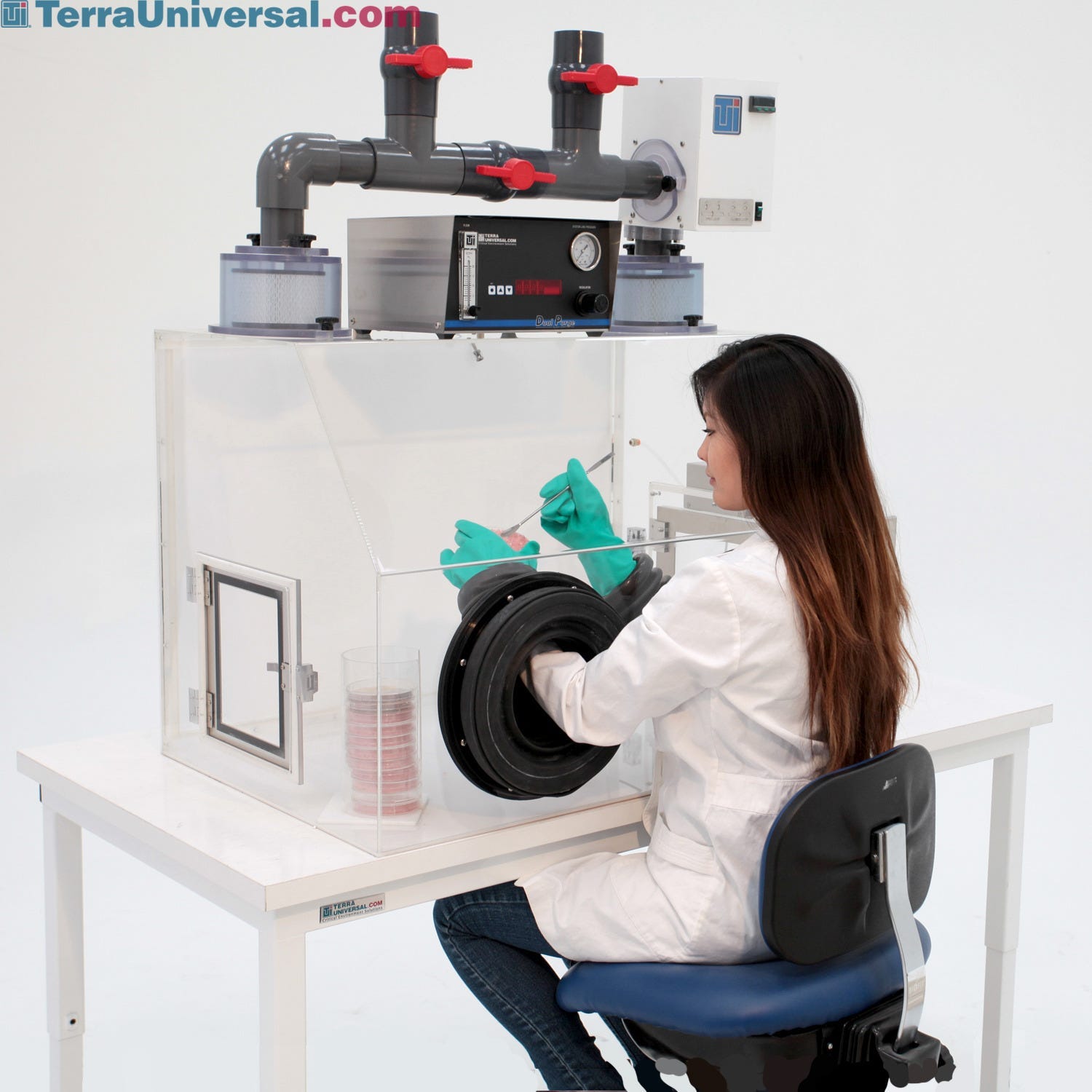 Retrieved from: https://www.terrauniversal.com/glove-boxes-isolators.php
External hoods can include slot hoods, capturing hoods or canopy hoods like the ones seen inside residential or commercial kitchens. External hoods can also be fitted with curtains or partial enclosures to help funnel air into the ventilation system.
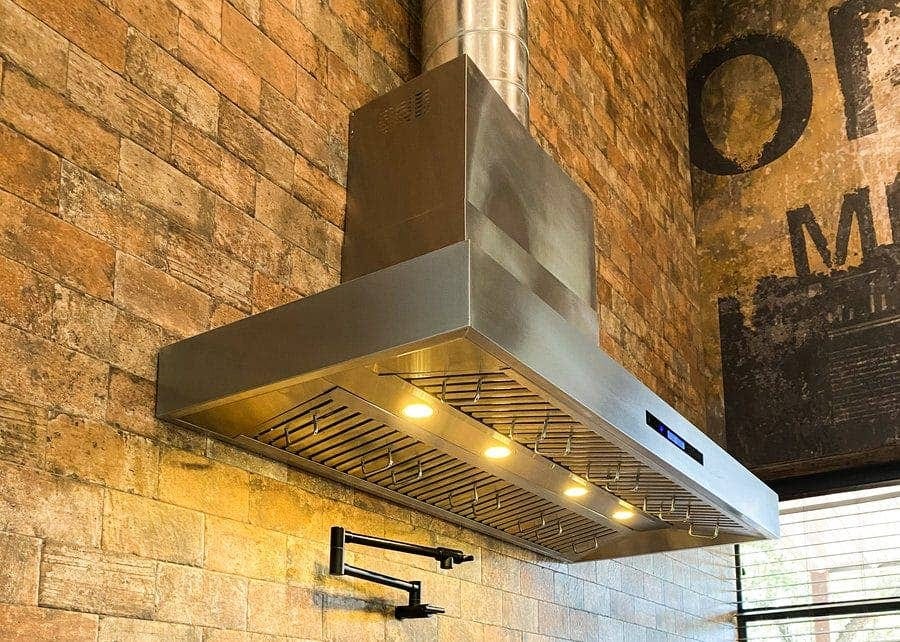 Retrieved from: https://www.prolinerangehoods.com/blog/range-hoods-that-vent-outside/
Both types of hoods require a certain amount of capture velocity. Capture velocity refers to the minimum hood-induced air velocity necessary to convey the contaminant into the hood. Capture velocity can be calculated using the following equation:
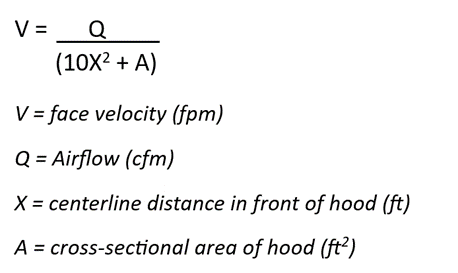
As the equation portrays, capture velocity and existing air flow are directly proportional. If a source releases a contaminant with a higher air flow, then the capture velocity also needs to be higher in order to overcome opposing air currents and transport the contaminant into the ventilation system.
For example, welding releases air with much lower energy than activities like grinding or abrasive blasting. Recommended capture velocities for welding hover between 100-200 feet per minute (fpm). Capture velocities increase with grinding and blasting, sitting at around 500-2000 fpm.
The Duct
Once air flows in through the hood, it moves through the ducts towards the air cleaning device(s). Air should move through ducts with minimal friction and optimal velocity. Lower velocity may prompt contaminants to settle out and plug the ducts. Higher velocity can cause denting and lead to potential leaks.
Velocities depend on the type of particulate flowing through the ducts. For example, aluminum oxide fumes must have a duct velocity of 1400-2000 fpm. Heavy dusts require a higher velocity of 4000-4500 fpm. Dusts typically contain larger and heavier particulates that have a higher chance of settling out.
Avoid duct designs that impede air movement and increase pressure loss, including excessive bends, longer or narrower ducts, ribbed materials or sharp corners.
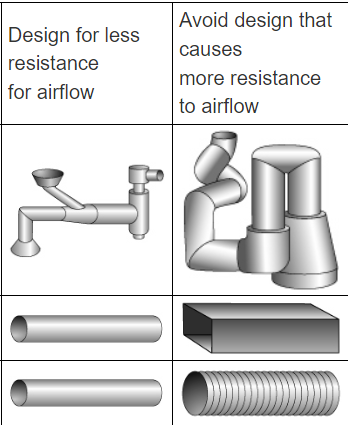 Retrieved from: https://www.ccohs.ca/oshanswers/prevention/ventilation/ducts.html
Air Cleaning Devices
As the most critical feature of an LEV system, air cleaning devices perform the bulk of contaminant removal before the air goes out the exhaust.
Air can be cleaned using a variety of devices including mechanical separators, wet collectors, absorbers, adsorbers, filters and electrostatic precipitators.
Mechanical separators include cyclone separators and impingement separators. Cyclones move air in a rotational fashion, causing the particles to hit the sides and settle out. With impingement separators, particulates strike a series of baffles as cleaned air flows through. Mechanical separators normally capture larger dust particles (more than 10 microns).
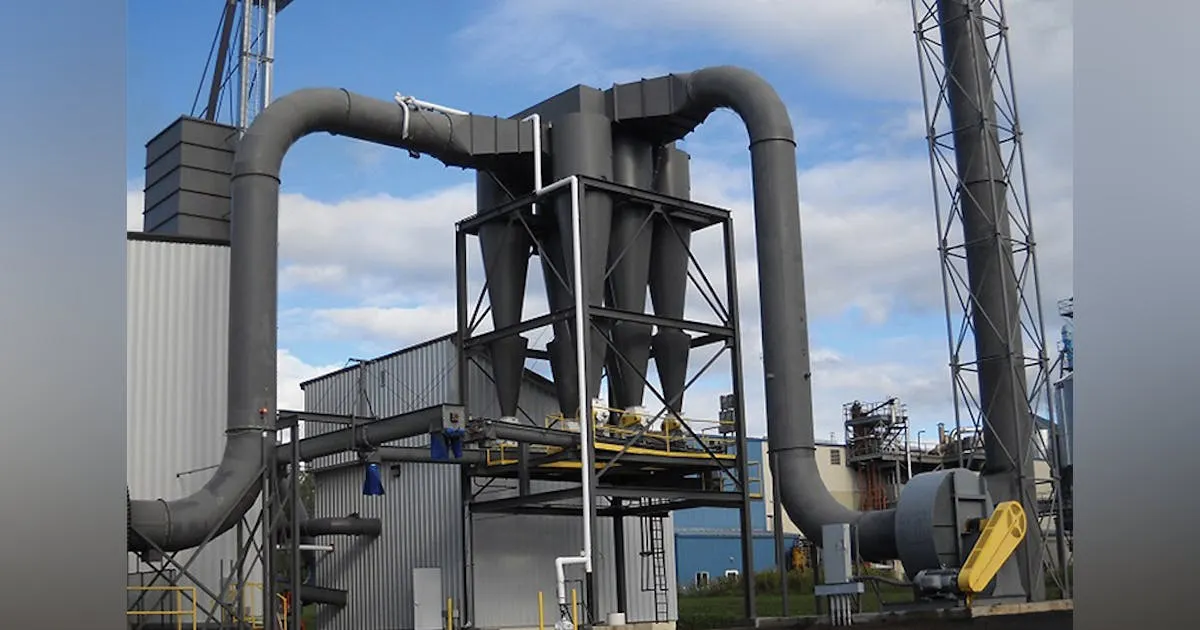 Retrieved from: https://www.processingmagazine.com/material-handling-dry-wet/powder-bulk-solids/article/15587677/cyclone-design-and-specification-considerations
Wet collectors use a liquid to collect contaminants and have them accumulate. Examples include scrubbers or spray chambers. These devices can be used in higher temperature settings and remove smaller particles (more than 5 microns).
Similarly, absorbers use a liquid solvent to dissolve particulates. The liquid then gets recycled. Adsorbers on the other hand, use a solid and porous medium to collect particulates. Examples of adsorbers include activated carbon, charcoal or silica gel. Activated carbon can collect and remove VOCs and other microorganisms from the air.
Filters can include fabric filters or high-efficiency particulate air (HEPA) filters. Fabric filters come in the form of bags, tubes or stockings. When air moves through the system, contaminants collect in the fabric bags. Fabric filters have temperature limitations depending on the type of particulate. These filters work best with dust laden with metal, silica and other particulate matter.
An electrostatic precipitator (ESP) charges particles either positively or negatively. The charged particles then accumulate on collector plates having the opposite charge. Having no temperature restrictions, ESPs can capture particles down to 0.25 microns.
Fans
Fans move air around the LEV system. LEV systems may use either axial fans or centrifugal fans. Fans are normally located downstream of the air cleaning device to control the amount of particulates from settling on the blades. Dirty or damaged blades can cause excess vibration, overheating, imbalance and general loss of function. To further prevent contaminants from flowing through a fan, an ejector positions a fan away from the vacuum that pulls contaminants upstream.
Fans serve as one of the final steps to drive cleaned air out of the exhaust and help maintain LEV function.
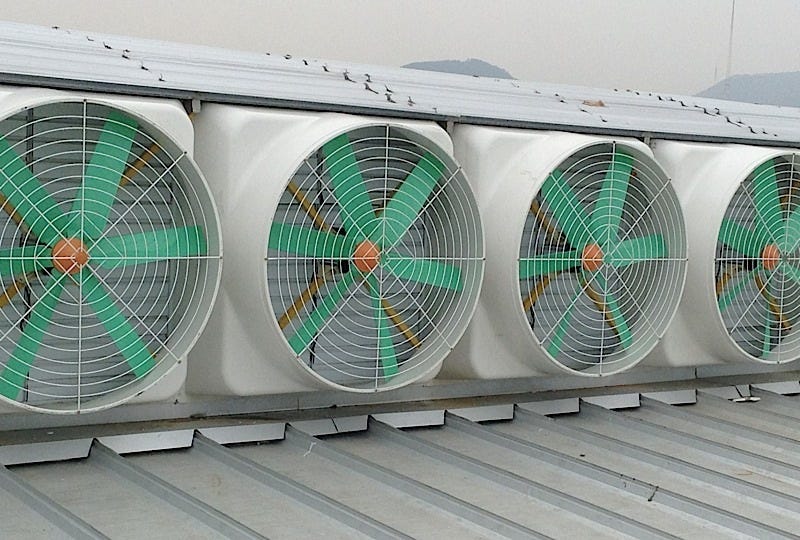 Retrieved from: https://www.hsewebsite.com/industrial-ventilation/
DILUTION VENTILATION
Dilution ventilation is typically not recommended for toxic contaminants. Dilution ventilation uses a large amount of clean air to mix with the air in a given space and dilute the existing contaminant.
Dilution systems work best when a fan pushes air from above or behind an employee, over the source of contaminants and towards the exhaust. This way, most of the contaminant will go past and away from the employee. One must ensure the cleanliness of the outdoor air when using dilution ventilation.
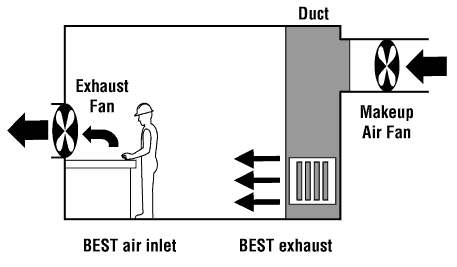 Retrieved from: https://www.ccohs.ca/oshanswers/prevention/ventilation/introduction.html/
Dilution depends on air flow, the mixing factor of a room and the contaminant’s molecular weight, evaporation rate and specific gravity. The “mixing factor” refers to the air exchange rate that occurs at a specific point in a room in order to dilute a contaminant. Serious hazards should have higher mixing factors. The required air flow in a dilution system is calculated using the following equation:
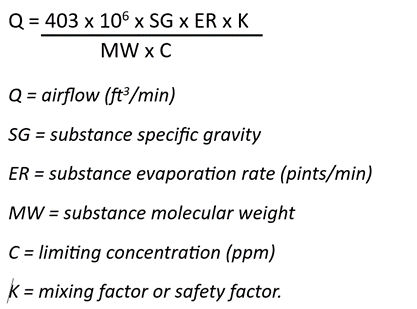
Because it uses a large amount of air and energy, dilution ventilation does not provide the most sustainable means of ventilating a contaminated space. Dilution should only be used under the following circumstances:
- The contaminant is not highly toxic or flammable.
- The contaminant can be easily transported to the exhaust.
- LEV is not feasible.
VENTILATION MEASUREMENT
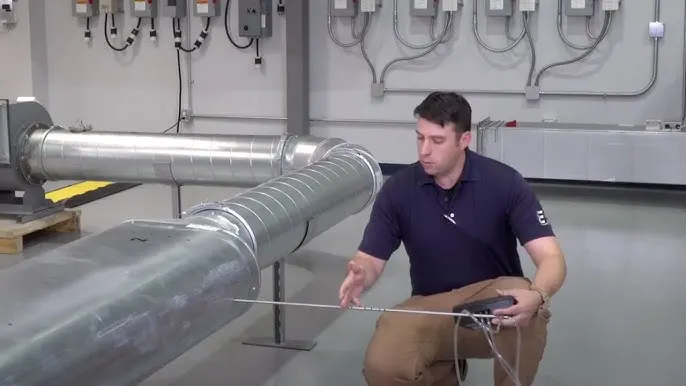
Many instruments can be used to assess air flow, air velocity and air pressure. Note that these instruments should be calibrated as needed.
- Smoke Tubes: These are hand-held pumps that disperse smoke or powder. One watches the movement of the smoke to see how it moves around an exhaust hood.
- Anemometers: These measure air velocity using an impeller or a vane that moves in the air. The faster the blades move, the more the velocity.
- Pitot Tubes: This device is inserted into an airstream to measure static, velocity and total pressure.
 Retrieved from: https://www.youtube.com/watch?app=desktop&v=axtZpQ-8A0o&ab_channel=OXYL8Ltd/
AIR QUALITY TESTING
After installing the correct ventilation system for the specific contaminant, companies should test the air quality. Air quality testing cements the effectiveness of a ventilation system by providing a reading on the amount of residual contaminant existing in a person’s breathing zone or out in the environment.
Companies can use air sampling equipment to measure indoor air quality and outdoor air pollution. After testing, readings are then compared to the permissible exposure limits or pollution standards.
The Occupational Safety and Health Administration (OSHA) sets exposure limits for various contaminants in the workplace, while the Clean Air Act and Environmental Protection Agency (EPA) regulate emissions of specific air contaminants into the environment. Stationary source emissions monitoring is used to determine pollution levels from regulated contaminants such as VOCs, particulate matter or sulfur dioxide.
PREVENTATIVE MAINTENANCE, INSPECTIONS AND TRAINING
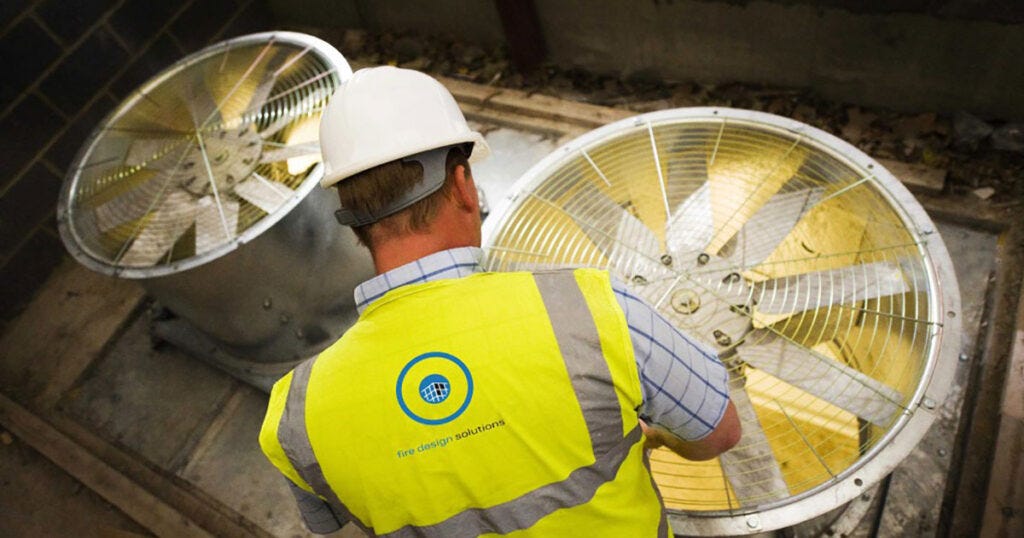
Like every machine, a ventilation system needs a preventative maintenance process to check, clean and update different components. Over time, machine parts wear out due to everyday use and different environmental conditions. Worn parts can affect machine performance and lower production. In some cases, ventilation ducts can also harbor microbial growth. Preventative maintenance reduces the number of breakdowns and increases machine longevity in a proactive manner. UV light installed inside ducts can also help prevent microbial growth.
Ventilation systems should allow for easy access to perform routine maintenance.
 Retrieved from: https://www.fdscontracting.co.uk/news/smoke-ventilation-system-maintenancesmoke-ventilation-system-maintenance-fds-service/
Inspections help ensure proper functioning of ventilation systems. Any damages can be reported and repaired before encountering malfunctions or safety-related incidents.
Train all employees who may be using a ventilation system while performing their work. Training should include inspecting the system, assessing any hazards, understanding the purpose behind the system, and safely operating and shutting down the system.
REFERENCES
- Brauer, R. L. (2022). Safety and health for engineers (4th ed.). John Wiley & Sons.
- Industrial ventilation — 1. Introduction. (2023, June 13). Ccohs.Ca. https://www.ccohs.ca/oshanswers/prevention/ventilation/introduction.html
- Plog, B. A., & Quinlan, P. J. (Eds.). (2012). Fundamentals of industrial hygiene (6th ed.). National Safety Council.