The Impact of Wildfires on Soil and Water Quality
Heat waves raise multiple health concerns for the general public and the environment. Two weeks ago, rising temperatures swept through the United States, ranging from 98°F (37°C) in the eastern regions, all the way to a scorching 120°F (49°C) in some southern and western parts.
Climbing temperatures can dry out air, water, and vegetation, creating the ideal breeding ground for potential wildfires. Now, heat alone cannot start a fire. All fires require heat, oxygen and fuel to ignite. Any fuel from anthropogenic activities or natural occurrences can spark a fierce fire, with the warm air and dried vegetation only helping to spread the flames further.
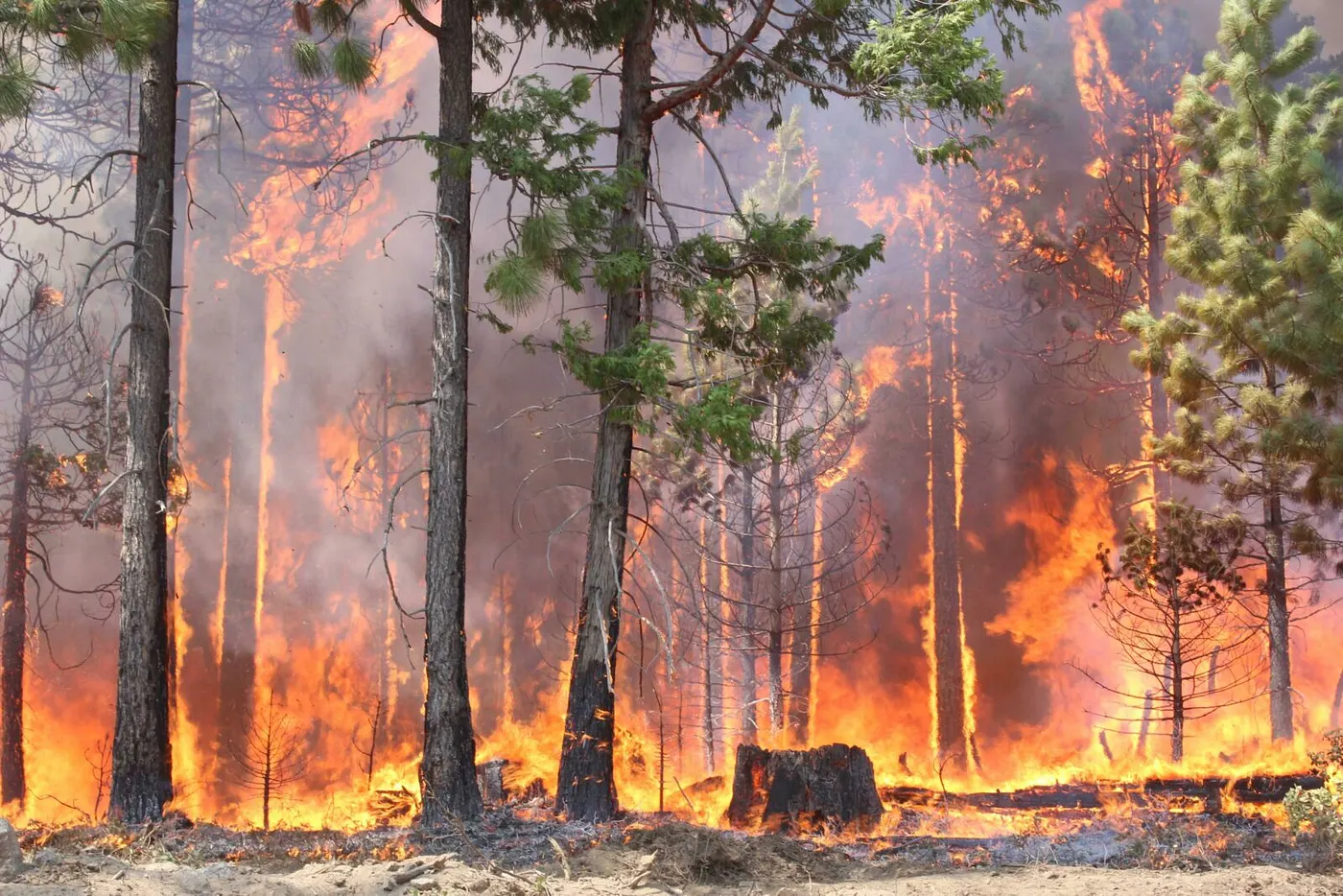
Wildfires engulf most materials in their path, leaving thick plumes laden with particulate matter, hydrocarbons, carbon monoxide and basically anything that burns. In addition to triggering a public health and safety concern, wildfires also disrupt soil, air, and water. For information on wildfires and air quality, check out my blog post titled Wildfire Smoke. This post will focus on the effects of fire on soil and water quality.
 Retrieved from: https://www.nationalforests.org/blog/what-happens-to-wildlife-during-a-wildfire
Impacts on Soil
While debilitating, wildfires do hold some importance for the environment and ecosystem. Wildfires stimulate plant and animal evolution, succession, competition, genetics and behavior. Wildfires help clean out litter and deadweight, fostering rebirth, reproduction and diversity. They may also diminish diseases and deadhead dying vegetation. Some wildlife and plant species have also learned how to adapt to wildfires. However, when wildfires become severe, intense and continuous, they may destroy more than they create.
Burnt and dead trees tend to remain the most obvious and visible impact of wildfires. When these trees burn and reduce to ash, they no longer keep soil in its place, providing a smoother surface for erosion and runoff. Wildfire events are usually followed by precipitation immediately after, redistributing a substantial amount of soil particles to lowlands and waterbodies.
Fires damage soil structure, reduce porosity, modify texture, decrease water holding capacity and lower infiltration rates. Reduced porosity, infiltration, and water holding capacity induce waterlogging on the surface, readying a larger amount of runoff to flow downhill. Fires, depending on the intensity and duration, can also make soil dry, coarse and hydrophobic, increasing its erodibility during rainfall events.
Hydrophobicity refers to a phenomenon where combustion of vegetation releases a gas that forms a waxy coating over soil, making the soil water-repellent. Hydrophobic soil does not allow water to penetrate, increasing waterlogging and runoff. Coarse-textured soils are more prone to hydrophobicity. Hydrophobicity also depends on the amount of litter present before a fire.
 Retrieved from: https://www.nationalforests.org/blog/what-happens-to-wildlife-during-a-wildfire
Initially, a small or less-intense fire may have beneficial impacts on soil. As the fire kills vegetation, it provides more degradable plant residue for microbes to decompose into soil organic matter (SOM). SOM contains decomposing plants, dead invertebrates, and live microbes that help maintain soil structure, sequester plant nutrients and enhance soil fertility. SOM contains a significant amount of plant nutrients, including nitrogen, phosphorus, sulfur, and carbon, making it a powerful repository for plant growth.
Intense wildfires however, can overheat and destroy SOM, altering nutrient cycling and increasing soil erodibility.
Impacts on Water
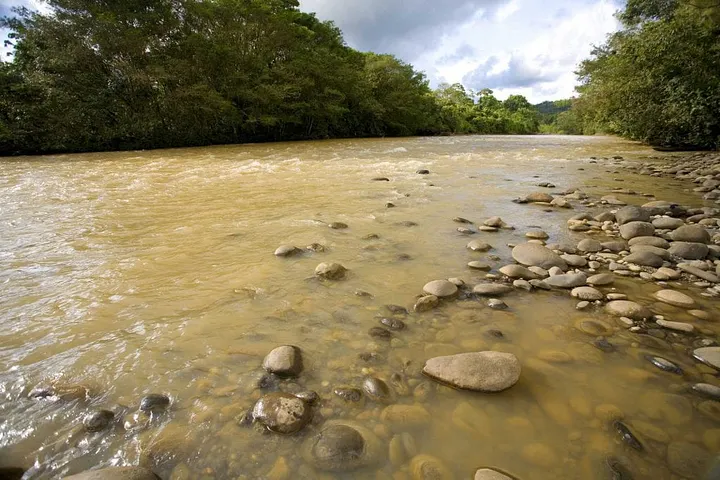
Soil has the ability to store nutrients, organic matter, metals, chemicals, heat and radium. After a wildfire, soil may contain large amounts of ash and charcoal from burnt vegetation, dead carcasses, chemicals, urban materials, and essentially anything that the fire engulfed in its path. As the soil erodes quicker and flows towards waterways, it carries all these pollutants into aquatic systems.
 Retrieved from: https://duraroot.com/water/point-source-pollution/sedimentation/
Soil does not fully dissolve in water. When excess soil accumulates in a waterbody, it may raise the waterbed and increase water levels. Higher water levels can induce flooding, collapse riverbanks and overwhelm sewage systems, further increasing pollution. Excess sediment also causes turbidity and blocks light for aquatic organisms. Excess sediment alone can bury fish eggs, detach aquatic plants, and disturb benthic habitat. The term “benthic” refers to anything that occurs at the bottom of a waterbody.
Other than the struggles associated with soil and sedimentation, the pollutants within the soil can have an even greater impact on aquatic systems.
Nutrient Loading
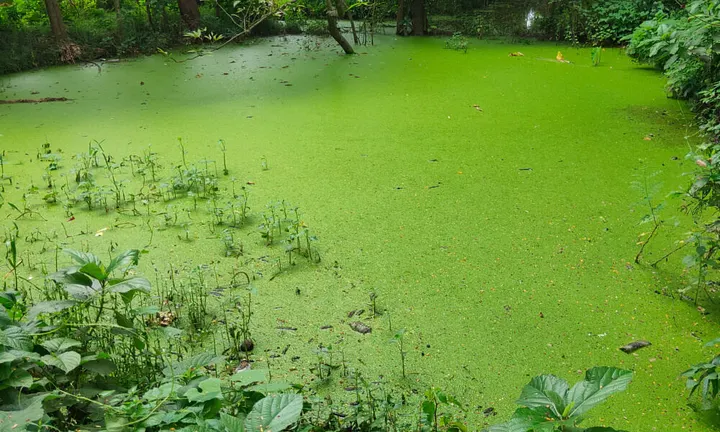
Eutrophication results when displaced soil brings excess nutrients such as nitrogen or phosphorus into a waterbody. Eutrophication refers to a process where excess nutrients overwhelm a waterbody and cause the proliferation of algae and other aquatic plants. An overgrowth of algae causes an imbalance in the ecosystem, smothering other organisms and depleting oxygen from the waterbody. For more information on eutrophication, check out my blog post titled Eutrophication and Water Pollution.
 Eutrophication Retrieved from: https://www.earth.com/news/nitrogen-overlooked-component-eutrophication-lake-ecosystems/
Metal Pollution
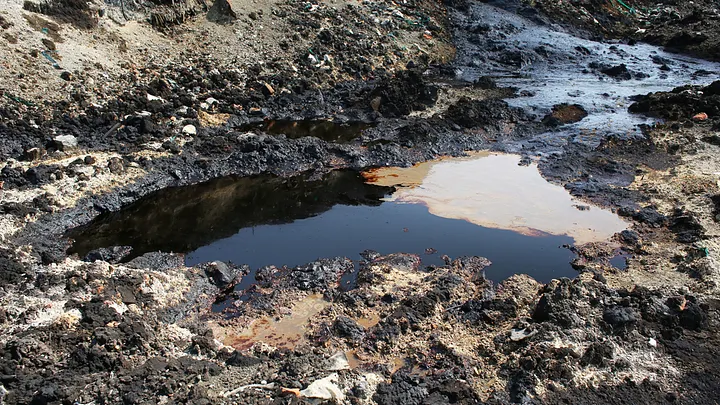
Wildfires can transform and redistribute metals in the soil such as trivalent chromium, lead, copper, aluminum, and cadmium. Soil and rocks may naturally contain trace amounts of these metals already. Metal concentrations increase through industrial processes and anthropogenic activities. Intense heat and combustion elicit metals to undergo several chemical reactions, potentially making them toxic and more mobile for exposure and uptake.
For example, a recent study found that intense wildfires can convert trivalent chromium into the more dangerous hexavalent chromium or chromium (VI). Prolonged exposure to hexavalent chromium may cause cancer and reproductive damage in humans. Acute effects on fishes can include irregular swimming, gill changes, cell toxicity, mucus discharge and death.
 Retrieved from: https://www.rdworldonline.com/scientists-rinse-soils-clean-of-dangerous-heavy-metals/
Wildfire events exacerbate soil erosion and runoff. Metals adhering to soil flow into waterbodies, where they are taken up by aquatic animals and plants. Some metals may stick to soil and persist in water for prolonged periods of time. Once absorbed, these metals accumulate within various tissues of organisms, gradually increasing in concentration as they move up the food chain. This chain reaction goes as follows: metals are absorbed by zooplankton and plants, which are consumed by small fish, which in turn are eaten by larger predatory fish, potentially ending up in human diets. Throughout this process, metals undergo chemical transformations and become more concentrated within each trophic level of the food chain.
Chemical Contamination
Wildfires also produce chemical pollutants including polycyclic aromatic hydrocarbons (PAHs) and volatile organic compounds (VOCs). Wildfires may emit these pollutants into the atmosphere, where they can travel long distances as vapor, or settle into waterways as particulates. Since wildfires alter soil structure and burn vegetation, chemical pollutants also flow into aquatic systems as part of soil erosion and runoff. VOCs mostly impact air quality and can cause a variety of cancers and negative health effects for human beings, potentially damaging the liver, kidneys or central nervous system.
Polycyclic aromatic hydrocarbons (PAHs) are a class of chemicals that form during the incomplete combustion of organic materials like wood, coal, oil and gasoline. PAHs include over a 100 different types of chemicals such as naphthalene and pyrene. They can enter the environment through wildfires, industrial emissions, wastewater treatment processes, or automobile exhaust systems. Post-wildfire soil and ash contain high amounts of PAHs. Most PAHs do not dissolve in water and adhere tightly to soil particles. PAHs produce carcinogenic, mutagenic and toxic effects in aquatic animals. Studies have shown that fishes, depending on the type, experience circulatory failures, endocrine disruptions and liver damage after being exposed to PAHs.
Controls
Many ecosystems have a natural resiliency when it comes to bouncing back from wildfires. Grasses, moss and weeds grow back the fastest. Terrestrial wildlife and insects creep back as well, taking advantage of the new and fresh food sources. The forest can emerge from the ashes and begin to bloom again.
The problem lies with high-intensity or highly-severe wildfires, that immediately induce soil erosion and water pollution. High-severity wildfires refer to a fire that has consumed more than 80% of all plants and roots. As soil detaches and travels downhill, it carries sediments and pollutants into waterways, destroying water quality and aquatic habitat.
Some forests may also take decades to transform back to their pre-wildfire landscape. High-intensity fires may also promote the proliferation of invasive plant species. Invasive grasses for example, compete for sunlight and soil nutrients with native plant species, eventually killing them off. The change in vegetation and lack of tree-cover also push various animals away, disrupting landscape health, ecosystem balance, and species richness. For example, birds use trees as a home to raise their young, while predators may use trees to hide during hunting. When trees burn down, both these uses disappear, causing several animals to emigrate and find new habitats.
Ultimately, protecting aquatic and terrestrial habitats comes down to conserving soil, re-establishing permanent vegetation, and managing invasive species. Keep in mind that these controls are mostly implemented for high-intensity wildfires with high amounts of erosion. Low to moderate-intensity wildfires may not require these controls.
Spreading mulch on soil can help slow runoff and soil erosion. Mulch covers the soil, absorbing raindrop impact and protecting the soil from detaching and moving downhill. Wood mulch is the most effective against soil erosion after a wildfire. Wood shred contains long pieces of wood that are less likely to get blown away or introduce the growth of invasive species. Wood mulch poses a big fire hazard, so its important to keep mulch moist, apply a thinner layer, and place these fragments away from living trees and structures.
Erosion barriers may include log contours, earthen berms or straw wattles. These barriers intercept runoff and prevent pollutants from entering waterbodies. As the name suggests, log contours consist of logs contouring around a slope in order to catch runoff. An earthen berm involves reshaping and raising part of the landscape to create an earthen wall. When building earthen berms, one should always consider and minimize soil disturbance. Straw wattles are tubes of straw that run across the perimeter of a slope and redirect runoff. Erosion barriers may not be suitable for areas with high levels of runoff or very steep slopes. It may also be difficult to cover large areas with these barriers.
To restore vegetation, slow erosion and interrupt invasive species, planting seeds or seeding can help return plant cover and biodiversity to areas with severe burns. Seeding does not provide immediate relief for erosion so it must be combined with mulching, erosion barriers and other controls. Seeding however, ensures long-term benefits for forests and greenspaces by strengthening the soil, allowing plant growth, and maintaining biodiversity. Roots holds soil in place and leaves and trees trap runoff.
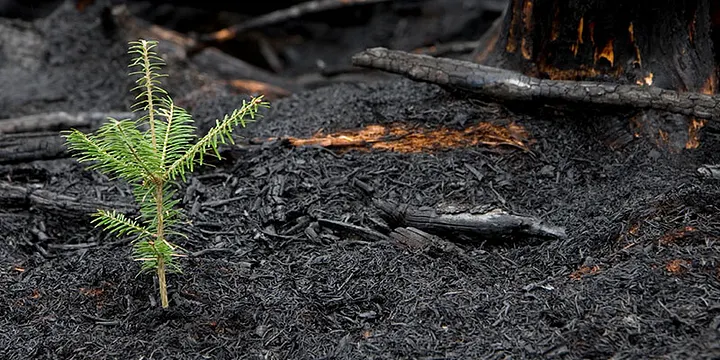 Retrieved from: https://www.arborday.org/stories/wildfires-are-growing.cfm
Conclusion
While wildfires play a natural role in ecosystem renewal, severe and high-intensity fires can have profound and lasting impacts on soil and water quality. Soil has the ability to carry various contaminants, including nutrients, metals and chemicals. Intense fires destabilize soil, increase erosion, and introduce pollutants into aquatic systems, threatening biodiversity and water resources.
Post-wildfire controls such as mulching, erosion barriers, and seeding can help mitigate pollution and promote ecosystem recovery. Soil conservation and vegetation re-establishment are critical steps to help safeguard both terrestrial and aquatic habitats, enhancing their resiliency against future wildfires.
References
-
Ahlstrom, S. J., Baldes, J., Bird, J., Brummer, T., Gill, P. S., Glenn, M., Harrison, N., Herstand, M., Hess, K., Hudlow, C., Jensen, M., Jordan, K., Lange, R., Mc Caughey, M., Park, N., Schroeder, M., Smith, H., Rew, S. S. D., Skurski, T., & Teaching Assistant. (2008). Forest Fire: examining the effects of recent fire on soil nutrients and microbes, and above and below ground vegetation. Montana.edu. https://landresources.montana.edu/archives/capstone/2008_Capstone.pdf
-
Bylak, A., & Kukuła, K. (2022). Impact of fine-grained sediment on mountain stream macroinvertebrate communities: Forestry activities and beaver-induced sediment management. The Science of the Total Environment, 832(155079), 155079. https://doi.org/10.1016/j.scitotenv.2022.155079
-
Campos, I., & Abrantes, N. (2021). Forest fires as drivers of contamination of polycyclic aromatic hydrocarbons to the terrestrial and aquatic ecosystems. Current Opinion in Environmental Science & Health, 24(100293), 100293. https://doi.org/10.1016/j.coesh.2021.100293
-
Fire effect on soil. (n.d.). Nau.edu. Retrieved June 21, 2024, from https://www2.nau.edu/~gaud/bio300w/frsl.htm
-
Honda, M., & Suzuki, N. (2020). Toxicities of polycyclic aromatic hydrocarbons for aquatic animals. International Journal of Environmental Research and Public Health, 17(4), 1363. https://doi.org/10.3390/ijerph17041363
-
How does wildfire impact wildlife and forests? (2022, October 7). Fws.gov. https://www.fws.gov/story/2022-10/how-does-wildfire-impact-wildlife-and-forests
-
Kieta, K. A., Owens, P. N., Petticrew, E. L., French, T. D., Koiter, A. J., & Rutherford, P. M. (2023). Polycyclic aromatic hydrocarbons in terrestrial and aquatic environments following wildfire: a review. Environmental Reviews, 31(1), 141–167. https://doi.org/10.1139/er-2022-0055
-
Lopez, A. M., Pacheco, J. L., & Fendorf, S. (2023). Metal toxin threat in wildland fires determined by geology and fire severity. Nature Communications, 14(1). https://doi.org/10.1038/s41467-023-43101-9
-
Polycyclic aromatic hydrocarbons (PAHs). (n.d.). Cdc.gov. Retrieved June 25, 2024, from https://wwwn.cdc.gov/TSP/ToxFAQs/ToxFAQsDetails.aspx?faqid=121&toxid=25
-
Prepas, E., Serediak, N., Putz, G., & Smith, D. W. (2009). Fires. In Encyclopedia of Inland Waters (pp. 74–87). Elsevier.
-
Roy, J. W., Grapentine, L., & Bickerton, G. (2018). Ecological effects from groundwater contaminated by volatile organic compounds on an urban stream’s benthic ecosystem. Limnologica, 68, 115–129. https://doi.org/10.1016/j.limno.2017.01.004
-
Sharma, D., Ahmed, A. and Lodhi, S. (2023, August). Chromium Toxicity In Aquatic Ecosystem: A Review. Ijcrt.org. https://ijcrt.org/papers/IJCRT2308064.pdf
-
Us Epa, O. (2016). Effects of acid rain. https://www.epa.gov/acidrain/effects-acid-rain
-
Young, K., Dohrenwend, K., McEttrick, M., Grover, H. (2023, June). Controlling Soil Erosion After Wildfire and Guiding Recovery in Southern Utah. Usu.edu. https://extension.usu.edu/ecorestore/research/soil-erosion-after-wildfire-guiding-recovery.pdf